What Can a Professional Tree Service Do for Your Hamilton, MT Property?
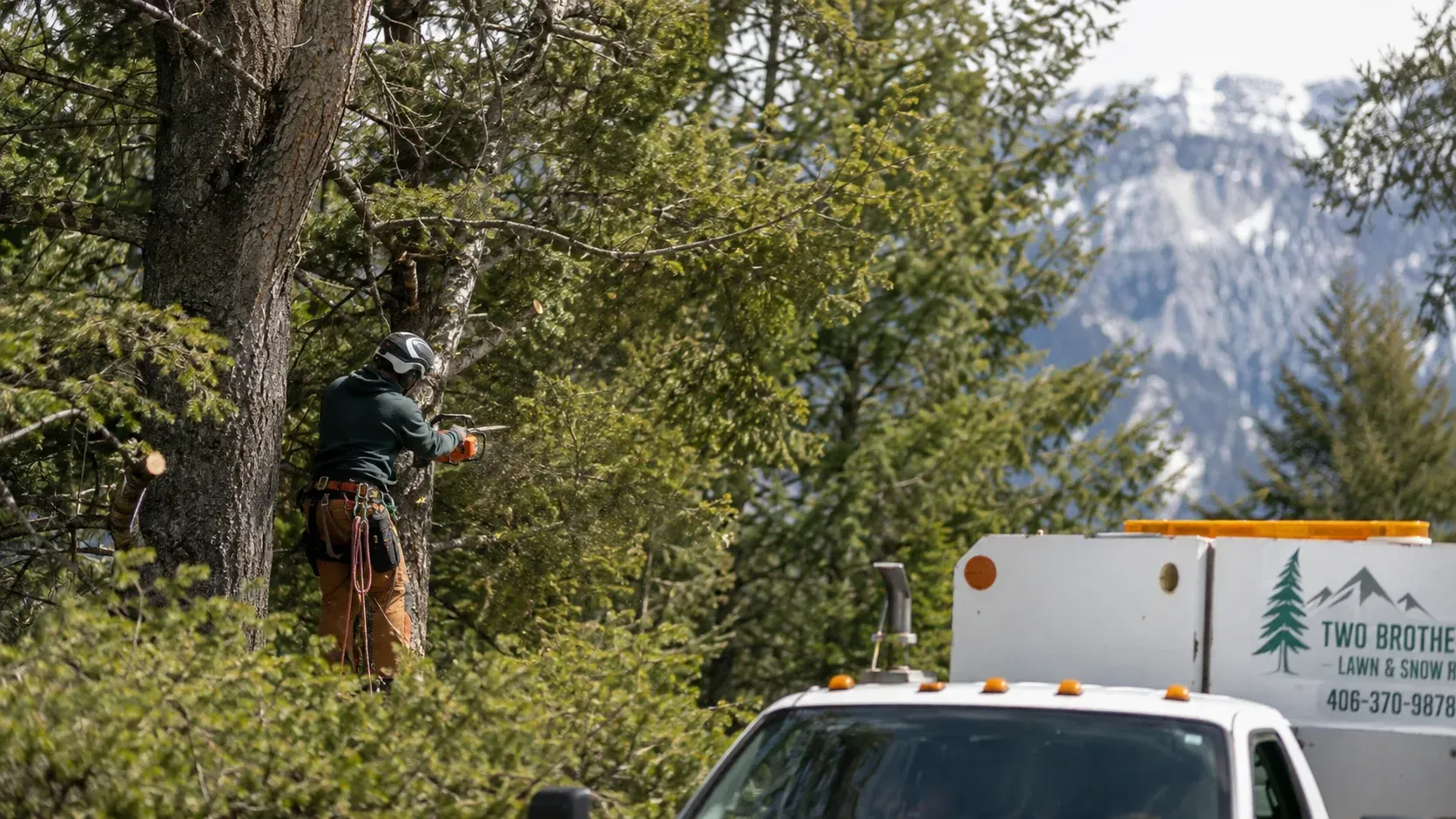
Table of Contents
- Introduction
- What Professional Tree Service Actually Includes
- Why Montana's Climate Affects Tree Care Decisions
- When Pruning Is the Right Approach
- When Tree Removal Becomes Necessary
- How Professionals Assess Tree Health and Risk
- Conclusion
- Have Questions About a Tree on Your Property?
- Frequently Asked Questions
Key Takeaways
- Professional tree service covers more than removal, including pruning, health assessment, and hazard identification
- Montana's climate, including heavy snow load and wind exposure, creates specific risks that affect tree care decisions
- Improper pruning or removal timing can weaken a tree or create safety hazards that are not always obvious right away
- Not every tree issue requires removal, and a professional assessment can clarify whether a tree can be treated or pruned instead
- Tree work involving power lines, large limbs, or structural instability generally carries more risk than most homeowners can safely manage alone
Introduction
A professional tree service can prune, remove, assess the health of, and manage the long-term safety of trees on a residential property, work that goes well beyond simply cutting down a tree that looks dead or overgrown. For homeowners in Hamilton, MT who want a healthy, well-kept landscape on their land, this kind of tree service matters because trees here deal with heavy snow load, strong seasonal wind, and temperature swings that can weaken limbs or root systems over time in ways that are not always visible from the ground.
Many property owners only think about tree service when something has already gone wrong, like a fallen branch or a tree that appears to be dying. In reality, tree health issues often develop gradually, and catching them early can prevent a smaller problem from becoming a larger, more expensive, or more dangerous one.
This article explains what professional tree service typically includes, how Montana's climate factors into tree care decisions, and what homeowners should understand before deciding whether a tree needs pruning, treatment, or removal.
What Professional Tree Service Actually Includes
Professional tree service typically includes pruning, removal, health assessment, hazard evaluation, and sometimes stump removal or debris cleanup, depending on the provider and the specific needs of the property.
Pruning involves selectively cutting branches to improve a tree's structure, reduce weight on weak limbs, or remove dead or diseased sections. This is different from removal, which involves cutting down the entire tree and often grinding or removing the stump afterward.
Health assessment is a less visible but important part of tree service. This involves checking for signs of disease, pest infestation, root damage, or structural weakness that might not be obvious to someone without training in tree biology.
Hazard evaluation focuses specifically on risk, such as whether a tree is likely to drop large limbs, whether its root system has become unstable, or whether it poses a risk to a structure, power line, or walkway during high wind or heavy snow. Once branches or a full tree come down, the resulting debris often ties into broader yard cleanup needs, since limbs, leaves, and wood chips need to be cleared before the rest of the landscape can be properly maintained.
Why Montana's Climate Affects Tree Care Decisions
Montana winters bring heavy, wet snow that can accumulate quickly on tree canopies, adding significant weight to branches that may already be weakened by disease or poor structure. This is one reason pruning timing matters more in this region than in areas with milder winters. Homeowners who already rely on snow removal services for their driveways and walkways during winter often notice this same seasonal strain showing up in their trees.
Wind exposure is another factor specific to areas like Hamilton and the surrounding Bitterroot Valley. Trees growing in open areas or on slopes can experience more consistent wind stress, which affects how root systems develop and how susceptible a tree becomes to toppling during storms.
Temperature swings between seasons, including sudden freezes after warm spells, can also stress trees in ways that are not always visible until damage has already occurred. According to the U.S. Forest Service, freeze damage can affect a tree's vascular tissue, sometimes leading to dieback that appears months after the actual freeze event.
When Pruning Is the Right Approach
Pruning is generally appropriate when a tree has dead, diseased, or structurally weak branches but the overall tree remains healthy and stable.
Pruning can improve a tree's long-term health by removing branches that are competing for resources or blocking light and airflow to the interior canopy. It can also reduce the risk of limb failure during storms by removing weight from weak or overextended branches.
Timing matters for pruning decisions. Many trees are best pruned during dormancy, in late fall or winter, since this reduces stress on the tree and lowers the risk of disease transmission through fresh cuts during active growing seasons.
Improper pruning, sometimes called topping, where large sections of the canopy are cut back indiscriminately, can actually weaken a tree's structure and lead to weak regrowth that is more prone to breaking in future storms.
When Tree Removal Becomes Necessary
Tree removal typically becomes necessary when a tree is dead, has significant structural instability, poses a safety risk to people or property, or has a disease that cannot be effectively treated.
Not every tree with some dead branches needs to be removed entirely. A tree with isolated dead limbs but a healthy trunk and root system may only need selective pruning rather than full removal.
However, trees with extensive trunk decay, severe lean, or root damage from construction or soil compaction often present a level of risk that pruning alone cannot resolve. In these cases, removal may be the more responsible option, particularly if the tree is near a home, driveway, or power line.
Removal decisions should account for the tree's location and what it could impact if it failed, as well as how the change will affect the rest of the property's landscaping, since a large tree's shade and root system often influence what can grow nearby once it is gone.
How Professionals Assess Tree Health and Risk
Professionals typically assess tree health and risk by examining the trunk, canopy, root flare, and surrounding soil for signs of decay, pest activity, structural weakness, or environmental stress.
Visual inspection often starts with the trunk, checking for cracks, cavities, or fungal growth that can indicate internal decay. The canopy is examined for dieback, unusual leaf discoloration, or sparse growth patterns that may point to disease or root problems.
Root flare inspection involves checking the base of the tree where it meets the soil, since issues like girdling roots or soil buildup against the trunk can restrict a tree's ability to take in water and nutrients over time.
Some assessments may also include checking for pest activity, such as bark beetle damage, which has been a documented concern in parts of Montana's forested and residential areas according to Montana State University Extension resources on forest health.
Conclusion
Professional tree service covers a range of work beyond simple removal, including pruning, health assessment, and hazard evaluation, each suited to different situations depending on a tree's condition and location. Montana's climate, particularly heavy snow load and wind exposure, adds specific considerations that affect how and when tree work should be approached.
Not every tree issue requires removal, and understanding the difference between a tree that needs pruning, treatment, or removal can help homeowners make more informed decisions about their property. Tree work involving height, large limbs, or proximity to structures generally carries risks that are difficult for most homeowners to manage safely without professional experience.
Have Questions About a Tree on Your Property?
If you have noticed dead branches, leaning, or other changes in a tree on your Hamilton, MT property, understanding what is actually happening before deciding on removal or pruning can help you make a more informed choice. This applies whether you are in Hamilton itself or one of the nearby communities within our service areas.
This is meant as general information, not a guarantee of a specific outcome, since every tree and property is different. If you would like to talk through what you are seeing with your tree, feel free to
contact us for an informational conversation, no pressure and no obligation.
Frequently Asked Questions
Does a tree with dead branches always need to be removed?
Not always. Dead branches can sometimes be addressed through selective pruning if the rest of the tree remains healthy and structurally stable.
How often should trees be pruned?
This varies by species and tree condition, though many trees benefit from pruning every few years, with dormant season pruning generally preferred for major cuts.
Is it safe to remove a large tree myself?
Large tree removal carries significant risk, including falls and unpredictable limb movement, and generally requires specialized equipment and experience to manage safely.
How can I tell if a tree is a hazard to my property?
Signs like visible trunk cracks, extensive dead canopy, fungal growth at the base, or noticeable leaning can indicate a hazard, though a professional assessment can confirm the actual risk level.
Does winter weather in Montana affect tree health?
Yes. Heavy snow load and wind exposure can stress branches and root systems, which is part of why seasonal timing matters for pruning and removal decisions in this region.