
Table of Contents
- Introduction
- What Defines a Modern Residential Landscape?
- How Can You Design a Modern Front Yard?
- How Can Wall Landscaping Add Structure?
- What Are Good Retaining Wall Landscaping Ideas?
- Which Plants Work Well in Modern Landscapes?
- Which Hardscape Features Complement Modern Homes?
- How Should You Plan Space?
- How Can Irrigation Support a Modern Landscape?
- Why Is Professional Landscape Planning Helpful?
- Conclusion
- Need Help With Your Residential Landscape?
- Frequently Asked Questions
Key Takeaways
- Modern landscaping emphasizes clean lines, purposeful layouts, and visual balance.
- Front yards can combine open areas, structured planting beds, and simple walkways.
- Retaining walls can provide both functional support and visual structure on properties with elevation changes.
- Repeating plant groupings can create a more organized contemporary appearance.
- Patios, walkways, retaining walls, and other hardscape features can make outdoor areas more functional.
- Irrigation and maintenance should be considered during the initial design rather than added as an afterthought.
- A professional landscape assessment can help match the design to the property, budget, and intended use.
Introduction
The best residential landscaping designs for modern homes combine clean lines, purposeful planting, and functional outdoor spaces, and custom landscaping services can help homeowners create a design that complements the architecture of the property.
Modern landscaping does not have to mean a completely minimalist yard with little greenery. Instead, contemporary landscape design is about being intentional with how plants, pathways, patios, retaining walls, lawn areas, and other outdoor features work together.
For homeowners in Hamilton and throughout the Bitterroot Valley, local conditions should also influence the design. Two Brothers Lawn and Snow serves Hamilton, Darby, Corvallis, Victor, and Stevensville with landscaping, lawn care, hardscaping, irrigation, and seasonal yard cleanup services.
What Defines a Modern Residential Landscape?
Modern residential landscaping generally focuses on simplicity, structure, and functionality.
Rather than filling every available area with plants and decorative features, a contemporary landscape often uses fewer elements more intentionally. Straight or geometric lines, defined planting beds, open lawn areas, and carefully selected materials can create a clean appearance without making the property feel sterile.
A modern landscape may include:
- Clearly defined planting beds
- Linear or geometric pathways
- Repeating plant groupings
- Open lawn areas
- Ornamental grasses and structured shrubs
- Patios and outdoor seating areas
- Retaining walls
- Decorative stone or gravel
- Landscape lighting
- Irrigation systems
The best design ultimately depends on the home's architecture and the way the homeowner wants to use the property.
How Can You Design a Modern Front Yard?
A modern front yard should provide a welcoming entrance while maintaining a clean and uncluttered appearance.
One effective approach is to establish a clear path from the driveway or sidewalk to the front door. Planting beds can then frame the path without blocking access or overwhelming the home's exterior.
Consider using:
- Low-maintenance shrubs
- Ornamental grasses
- Small trees with defined forms
- Repeating groups of the same plant
- Simple stone or paver walkways
- Mulch or decorative stone
- Subtle landscape lighting
Keeping some open space is also important. A completely packed front yard can make even a large property feel visually crowded.
The landscape should support the home's architecture rather than compete with it.
How Can Wall Landscaping Add Structure?
Wall landscaping can introduce vertical structure and help define different portions of a yard.
For example, a wall can separate a patio from a planting area, frame a walkway, create a raised garden bed, or help manage changes in elevation.
Depending on the property, walls may incorporate:
- Natural stone
- Pavers
- Concrete
- Masonry
- Decorative landscape materials
Plants can then soften the structure without hiding it completely. Low-growing plants, ornamental grasses, and cascading varieties can create contrast between hard surfaces and greenery.
Wall landscaping can be particularly useful when the property has limited usable space because it allows homeowners to introduce different planting levels without expanding the landscape footprint.
What Are Good Retaining Wall Landscaping Ideas?
Retaining walls can be both practical and visually appealing. On sloped properties, they can help create usable levels while contributing to the overall landscape design.
Some modern retaining wall landscaping ideas include:
Tiered Planting Beds
Instead of creating one large sloped planting area, retaining walls can divide the slope into several levels. Repeating the same plants across each level can create a clean, organized appearance.
Defined Walkways
A retaining wall can frame a walkway and create a stronger transition between different portions of the property.
Driveway Borders
Low retaining walls can help define the edge of a driveway while separating it from lawns or planting beds.
Raised Garden Areas
Retaining walls can create elevated planting spaces that add dimension to an otherwise flat landscape.
Two Brothers Lawn and Snow provides custom hardscaping services in Hamilton and surrounding communities, including patios, retaining walls, and other outdoor features.
Which Plants Work Well in Modern Landscapes?
Modern landscape design does not necessarily require exotic plants. In many cases, the strongest results come from selecting plants that suit the property and arranging them in a deliberate pattern.
Plant categories that can work well include:
- Ornamental grasses
- Evergreen shrubs
- Perennials
- Ground covers
- Small ornamental trees
- Structured shrubs
Repetition is particularly useful. Rather than using ten completely different plants in a small bed, repeating three or four complementary varieties can create rhythm and visual consistency.
Plant selection should also account for the local growing environment, available sunlight, soil conditions, water requirements, and the amount of maintenance the homeowner is willing to perform.
Which Hardscape Features Complement Modern Homes?
Hardscaping gives a modern landscape much of its structure. It can also make an outdoor area more useful for everyday living.
Popular features include:
Patios
A patio can establish a dedicated space for dining, entertaining, or relaxing outdoors.
Walkways
Simple stone or paver walkways can connect the driveway, front entrance, patio, garden, and other areas.
Retaining Walls
Retaining walls can address elevation changes while creating defined planting areas.
Fire Pits
A fire pit can create a focal point and make an outdoor seating area more functional.
Water Features
Water features can introduce movement and sound while serving as a visual focal point.
Two Brothers' landscaping and hardscaping services include custom paver patios, walkways, retaining walls, and water features.
How Should You Plan Space?
Good landscape design starts before plants or hardscape materials are installed.
Begin by considering how the property is currently used and how you want it to function in the future.
Think about:
- Where people enter and exit the property
- Where children or pets use the yard
- Where outdoor seating will be located
- How much lawn you actually need
- Where planting beds should be placed
- Existing slopes and drainage patterns
- Sun and shade conditions
- Access for future maintenance
- How mature plants will look several years from now
It is also important to consider how different elements will look together. A patio, retaining wall, planting bed, and lawn should feel like parts of the same landscape rather than separate projects.
How Can Irrigation Support a Modern Landscape?
Irrigation should be considered during landscape planning because plant beds, lawns, and other areas may have different watering requirements.
An appropriately designed system can distribute water where it is needed without requiring homeowners to manually water every portion of the property.
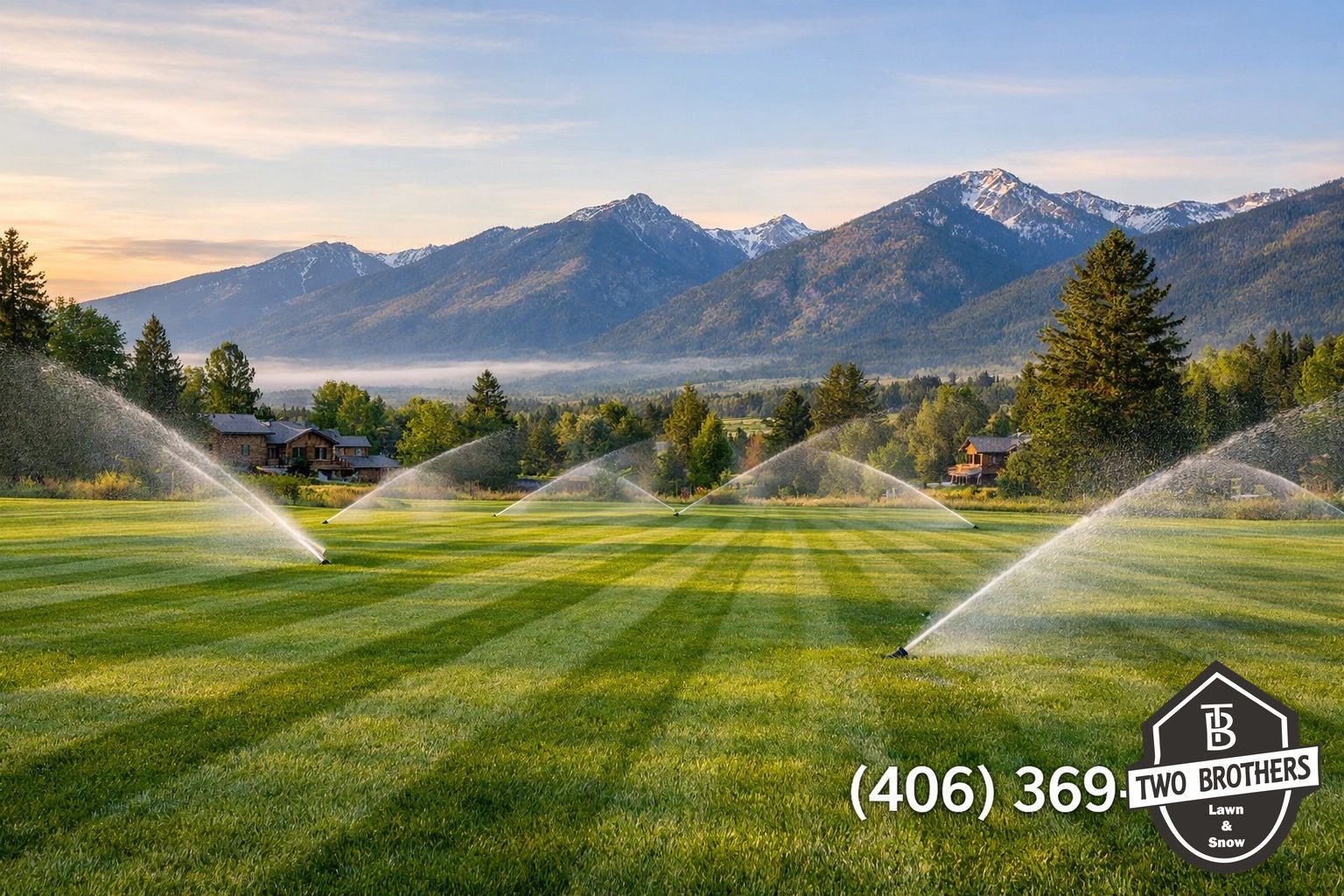
Two Brothers provides irrigation installation services in Hamilton and surrounding areas, including customized irrigation systems designed for efficient water distribution.
Planning irrigation alongside the landscape can also help avoid having to disturb finished planting beds or hardscape features later.
Why Is Professional Landscape Planning Helpful?
Professional landscape planning can help homeowners evaluate the property before committing to individual improvements.
Two Brothers states that it provides free on-site assessments for its services and uses those assessments to make recommendations based on a property's needs, budget, and style.
Professional input can be particularly useful when a project involves multiple components, such as:
- New planting beds
- Retaining walls
- Patios
- Walkways
- Irrigation
- Lawn installation
- Landscape lighting
- Water features
Instead of treating each feature as a separate project, a coordinated plan can help the finished landscape feel more cohesive.
Conclusion
The best residential landscaping designs for modern homes balance clean aesthetics with practical outdoor use. Structured planting beds, open lawn areas, simple pathways, carefully selected plants, and complementary hardscape features can create a landscape that feels contemporary without sacrificing comfort or functionality.
Retaining walls and other structural elements can add dimension to sloped properties, while irrigation and thoughtful plant selection can make long-term maintenance more manageable.
For homeowners in Hamilton and the surrounding Bitterroot Valley communities, professional landscape planning can also help ensure the design fits the property and its intended use.
Need Help With Your Residential Landscape?
If you are ready to create a more functional and visually cohesive outdoor space, Two Brothers Lawn and Snow offers custom landscaping and hardscaping services in Hamilton, Darby, Corvallis, Victor, and Stevensville. Their landscaping services include custom landscape design, planting, walkways, patios, landscape lighting, water features, and related outdoor improvements.
For a property-specific assessment and quote, contact us to discuss your landscaping goals with the team.
Frequently Asked Questions
What is a modern landscaping design?
A modern landscaping design typically uses clean lines, organized planting arrangements, functional outdoor spaces, and a limited selection of complementary materials and plants.
What should I put in a modern front yard?
A modern front yard can include structured planting beds, ornamental grasses, shrubs, small trees, simple walkways, open lawn areas, and subtle lighting.
Are retaining walls good for modern landscaping?
Yes. Retaining walls can create planting levels, manage elevation changes, define walkways, and add architectural structure to a modern landscape.
How do I make my landscaping look more modern?
Use repetition, defined lines, uncluttered planting beds, complementary hardscape materials, and a limited number of plant varieties. Keeping the layout organized can create a more contemporary appearance.
Should I include irrigation in a new landscape design?
Planning irrigation at the beginning of a landscaping project can help provide appropriate water distribution to lawns and planting areas while reducing the need to modify finished landscape features later.